
Community Cultural Encounters
Community Cultural Encounters
Community Cultural Encounters in Uganda: Authentic, Respectful Travel That Benefits Local People
Uganda is often introduced through its iconic wildlife mountain gorillas in misty forests, chimpanzees in primeval jungles, and savannahs alive with big game. Yet one of the most powerful ways to understand the country is through community cultural encounters: visits and experiences designed and led by local people that share living traditions, daily routines, and histories while generating tangible benefits for the communities involved.
These encounters aren’t “performances” in the shallow sense. At their best, they’re carefully hosted exchanges: you learn how families farm, cook, sing, build, and celebrate; communities receive income, employment, and a platform to preserve what they value. This article explores where and how to engage in cultural experiences across Uganda, what to expect, how to choose ethical options, and how to combine them with nature focused itineraries.
What Are Community Cultural Encounters (and Why They Matter)?
Community-based cultural tourism in Uganda typically refers to activities that are:
- Locally owned or co-managed, often through community associations or cooperatives
- Guided by residents, not just external operators
- Designed to share culture responsibly, with clear consent and boundaries
- Structured so revenue circulates locally (guides, artisans, homestays, community funds)
Key benefits when done well
- Cultural preservation: crafts, language, music, oral history, and rituals can be sustained
- Livelihood support: guiding, catering, homestays, and craft sales diversify income
- Education and pride: youth involvement helps keep knowledge intergenerational
- Conservation alignment: communities with tourism income often have stronger incentives to protect ecosystems
Uganda’s Cultural Mosaic: A Quick Context
Uganda is home to dozens of ethnic groups with distinctive languages, cuisines, and social traditions shaped by geography from the Rwenzori Mountains to the Albertine Rift, the Lake Victoria basin, and the dry northeast.
Rather than trying to “cover everything,” aim for depth: a small number of encounters with enough time for genuine connection.
Where to Experience Community Culture in Uganda
1) Batwa Cultural Experiences (Southwestern Uganda)
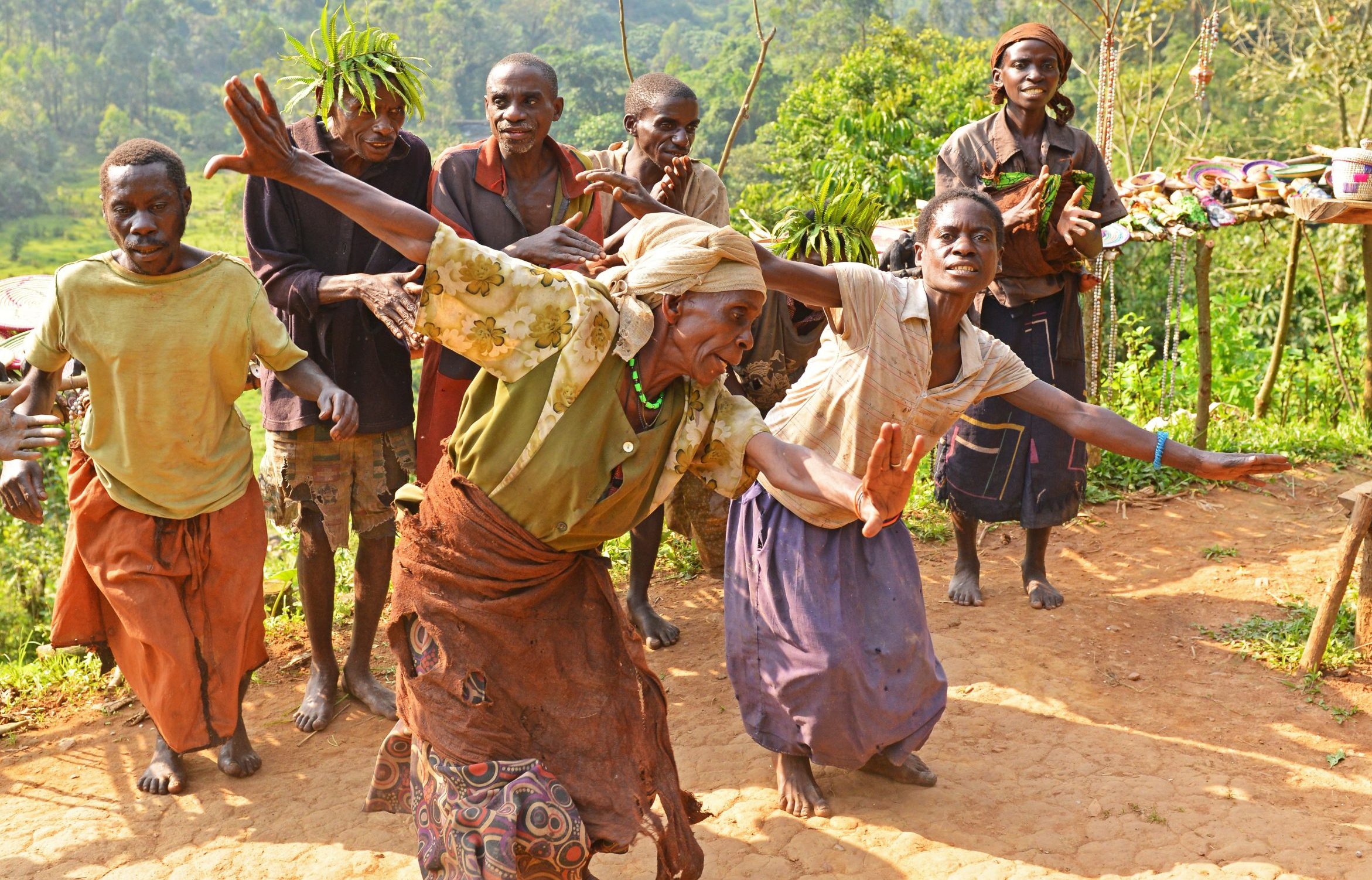
Near Bwindi Impenetrable National Park and Mgahinga Gorilla National Park, Batwa communities share aspects of forest life, storytelling, and music. Many programs also address historical displacement and support education and healthcare.
What you might do
- Guided walks explaining medicinal plants and traditional forest knowledge
- Storytelling and dance with community context (not just “entertainment”)
- Craft demonstrations and opportunities to support community projects
How to approach respectfully
- Ask what photography is permitted
- Avoid treating people as “attractions”; ask questions like you would with any host
- Choose programs that explain how fees are distributed and what projects are funded
2) Karamojong Cultural Encounters (Northeastern Uganda)
The Karamoja region offers a striking cultural landscape pastoral traditions, kraals, beadwork, and strong community identities. Visits can include homesteads, markets, and storytelling with elders, depending on the community’s preference.
Possible experiences
- Village visits with interpretive guiding (daily life, livestock culture, foodways)
- Beadwork and craft workshops
- Market day visits with cultural etiquette briefing
Tip: Pair this region with wildlife viewing in Kidepo Valley for a trip that’s both culturally rich and scenically dramatic.
3) Buganda Heritage & Kampala Cultural Layers (Central Uganda)
In and around Kampala, you can engage with Uganda’s urban culture and royal heritage. Experiences may include visits to cultural sites, arts spaces, and food tours that show contemporary Ugandan identity.
Good encounter styles
- Guided heritage walks with local historians
- Traditional cuisine experiences (with context on ingredients and history)
- Craft centers supporting artisan groups
4) Bunyoro, Tooro, and Fort Portal Area (Western Uganda)
The Fort Portal region is a strong base for cultural encounters tied to tea culture, crater-lake landscapes, and local kingdoms’ histories.
Try
- Community walks through villages and farms
- Storytelling on local history and clan systems
- Coffee/tea experiences that follow the chain from garden to cup
5) Busoga & Jinja (Eastern Uganda)
Jinja is famous for the Nile and adventure activities, but it’s also a gateway to community visits, artisan projects, and cultural storytelling linked to the river’s significance.
What to Expect: A Realistic Look at the Experience
A quality community encounter usually includes:
- A host introduction: who you’re meeting, why the program exists, and what’s appropriate
- A guided activity: walk, demonstration, meal, or workshop
- Time for conversation: questions, shared stories, and mutual curiosity
- A clear way to support locally: craft purchases, tip guidance, or project contributions
Common misconceptions to avoid
- “Authentic” doesn’t mean “unchanged.” Culture evolves and that’s normal.
- Not every tradition is open to visitors. Ethical programs set boundaries.
- A community encounter isn’t a zoo. Respect and consent come first.
Ethical Guidelines for Visitors (Practical and Important)
Do
- Ask before photographing people, homes, or sacred objects
- Learn a few greetings in the local language
- Pay fair prices for crafts (avoid aggressive bargaining)
- Follow instructions about where you can walk and what you can touch
- Choose experiences that share revenue transparently
Don’t
- Give sweets or money to children (support community funds instead)
- Treat ceremonies as “content” for social media
- Assume poverty equals permission to intrude
- Push for access to restricted rituals or spaces
How to Choose a Responsible Cultural Encounter Operator
When booking, look for signals of integrity:
- Community ownership or formal partnerships
- Clear fee breakdowns (guides, community fund, logistics)
- Small group sizes
- Local employment (guides, cooks, drivers, coordinators)
- Code of conduct communicated before the visit
If an operator can explain how the community benefits and the community confirms it, you’re likely on the right track.
How to Combine Cultural Encounters with Wildlife & Nature Itineraries
A balanced Uganda itinerary can weave culture and nature without rushing either.
Sample itinerary ideas (modular)
- Bwindi / Mgahinga: gorilla tracking + Batwa experience
- Queen Elizabeth NP: game drives + community visit + craft cooperative stop
- Kidepo / Karamoja: wildlife + pastoral culture + market day
- Kibale: chimp tracking + village walk + farm-to-table lunch
FAQ: Community Cultural Encounters in Uganda
1) Are community cultural encounters in Uganda safe?
Yes, when arranged through reputable local guides or tour operators and when you follow local advice. Safety varies by region, so confirm current travel guidance and local conditions.
2) How much time should I allocate for a cultural encounter?
Most experiences take 2–4 hours. For deeper engagement, consider a half-day visit or an overnight homestay where appropriate.
3) Can I combine cultural encounters with gorilla trekking?
Absolutely. Many travelers pair gorilla trekking in Bwindi or Mgahinga with nearby community experiences for a more rounded trip.
4) Is it okay to bring gifts for the community?
It’s better to contribute through structured channels (community funds, school programs, or cooperatives) rather than ad-hoc gifts. If you want to help, ask the community leaders what’s most useful.
5) What should I wear and how should I behave?
Dress modestly and comfortably (especially in rural areas). Ask permission before taking photos, avoid interrupting daily routines, and listen to your guide’s cultural etiquette briefing.